

Electric vehicles are changing how we drive. However, home charging is where convenience meets risk if not handled correctly. Many homeowners assume plugging in is enough. In reality your system must meet strict EV charger home electrical requirements in Ontario to function safely. Charging at home sounds simple. Yet, without proper preparation, your electrical system can struggle silently until something goes wrong. Understanding these risks early helps you avoid costly mistakes and ensures safe daily charging.
Why Your Home Electrical System Is the Real Game Changer?
You might think the charger is the most important part. It’s not. Your home’s electrical system does all the heavy lifting behind the scenes. A professional electrician barrie often finds that many homes are not designed for continuous high-load usage. This is where installing EV charger electrical capacity becomes critical. Without proper capacity your system may overheat, trip frequently, or even fail completely under pressure.
Think of it like pouring water into a glass that’s already full. Eventually something spills. Your electrical system behaves the same way when overloaded.
Understanding EV charger home electrical requirements Ontario in Simple Terms
Let’s simplify it. Your EV charger needs more power than most household appliances. That means your system must be ready to handle it without stress.
Here’s what your home typically needs:
- Enough panel capacity to support high load
- Dedicated circuit for safe operation
- Proper grounding and protection
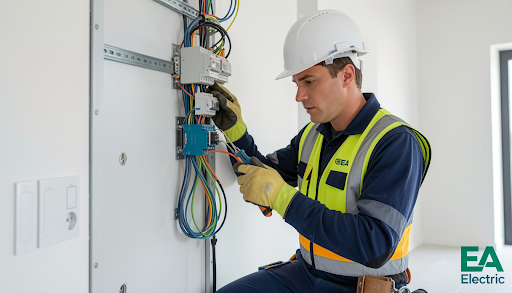
Meeting EV charger home electrical requirements Ontario ensures your charging system works efficiently without creating hidden dangers inside your walls.
Do You Really Need a Panel Upgrade for EV Charging?
This step is where most homeowners hesitate. The idea of upgrading sounds expensive. However, skipping it can cost far more later.
The Real Answer to “Do I need panel upgrade for EV charger?”
If your panel is already near its limit, adding an EV charger will push it beyond capacity. This situation leads to overheating, system instability, and repeated breaker trips.
Situations Where Upgrade Is Necessary
- Older homes with outdated panels
- Homes running multiple heavy appliances
- Limited panel space for new circuits
In contrast, homes with newer systems may handle it without upgrades. However, only proper evaluation can confirm this.
The Hidden Risks Behind EV charging safety at Home in Canada
Let’s be honest. Electricity doesn’t forgive mistakes. Charging your EV without proper setup introduces risks that are often invisible until damage occurs.
Common risks include:
- Overloaded circuits leading to heat buildup
- Fire hazards due to weak wiring
- Inconsistent charging performance
Ensuring proper EV charging safety at home Canada protects not just your vehicle but your entire home environment.
What Happens When You Ignore Electrical Capacity Limits?
Ignoring capacity limits is like ignoring warning signs on a highway. You may get away with it for a while. However, eventually something breaks.
Immediate Problems You May Notice
- Breakers tripping again and again
- Slower than expected charging
- Lights flickering during use
Long-Term Consequences
- Permanent wiring damage
- Expensive system repairs
- Increased fire risk
Understanding installing EV charger electrical capacity early helps you avoid these issues completely.
Level 1 vs Level 2 Chargers: Impact on Your Electrical System
Not all chargers demand the same power. Choosing the wrong one without understanding your system can create unnecessary stress.
Level 1 Charger
This device uses a standard outlet and consumes less energy. However, charging is extremely slow and often impractical for daily use.
Level 2 Charger
This is faster and more efficient. However, it requires higher power and often needs system upgrades to operate safely.
Choosing the right option depends on your daily driving needs and your home’s electrical strength.
Real-Life Scenario: A Costly Mistake That Could Have Been Avoided
Imagine this situation. A homeowner installs a Level 2 charger without checking capacity. At first everything seems fine. Then breakers start tripping. Wiring begins overheating.
Within months the system requires major repairs.
Now compare this to someone who checks EV charger home electrical requirements Ontario first. They upgrade their panel and enjoy smooth charging without issues.
The difference is planning.
Warning Signs Your Home Is Not Ready for EV Charging
Your home often gives subtle signals before serious problems occur. Ignoring them can lead to bigger issues.
Look for:
- Frequent breaker trips
- Warm or buzzing electrical panel
- Flickering lights during heavy usage
- Limited space in breaker panel
These signs indicate your system may not support additional load safely.
Why is Professional Evaluation Nonnegotiable?
DIY decisions can be risky when dealing with electricity. A professional assessment removes guesswork and ensures safety.
Experts evaluate:
- Current electrical load
- Panel capacity
- Future energy requirements
This ensures your EV charger installation aligns with EV charging safety at home Canada standards while delivering reliable performance.
The Cost Debate: Upgrade Now or Pay Later
Many homeowners delay upgrades due to cost concerns. However, this often leads to higher expenses in the long run.
Investing in the Right Setup
- Safe and stable system
- Efficient charging performance
- Long-term reliability
Avoiding Upgrades
- Repeated repair costs
- System failures
- Safety hazards
Spending wisely now prevents expensive problems later.
Smart EV Charging Solutions for Modern Homes
Modern homes demand smarter systems. EV charging is no longer just about plugging in. It’s about efficiency, control, and scalability.
Advanced solutions include:
- Smart load balancing systems
- Energy-efficient chargers
- Future-ready electrical upgrades
These upgrades not only improve charging but also enhance overall home efficiency.
Step-by-Step Safe EV Charger Installation Process
A structured approach ensures everything works perfectly from day one.
Step 1: System Inspection
Evaluate your current electrical setup.
Step 2: Load Calculation
Understand your total power consumption.
Step 3: Upgrade if Needed
Install a higher-capacity panel if required.
Step 4: Professional Installation
Ensure compliance with safety standards.
Step 5: Testing and Optimization
Verify performance and efficiency.
Following this process ensures full compliance with EV charger home electrical requirements Ontario.
Why Local Expertise Makes a Big Difference
Local professionals understand regional codes and real-world challenges better than anyone. They ensure your installation meets safety standards and performs efficiently.
A skilled electrician innisfil identifies hidden issues and recommends the best solution based on your home’s specific needs. This local expertise ensures long-term reliability and peace of mind.
Conclusion: The Smart Way to Approach EV Charging at Home
Charging your EV at home is safe when done correctly. However, ignoring system limitations creates unnecessary risks. Following EV charging safety at home Canada guidelines ensures your home remains secure and efficient.
The smartest move is not guessing. It’s preparing your system properly so your EV charging experience stays smooth, safe, and stress-free every single day.